Category Archives: Planning

VDT turns against VLCIA and its biomass plant

The newspaper of record in Valdosta and Lowndes County has reversed course on biomass. Top of the front page in a landmark issue: Wednesday, October 27, 2010:
Biomass plant fuels questions

by Johnna Pinholster
The Valdosta Daily Times

VALDOSTA — As the state and nation look to renewable energy solutions, locally, a proposed green energy plant is causing controversy and raising questions that remain unanswered.

The Valdosta-Lowndes County Industrial Authority and Wiregrass Power, LLC are in the beginning phases of developing property for a future biomass electric generating plant.

Issues with lack of information

Continue reading

“Proposed plant said to be ‘medical atrocity'”

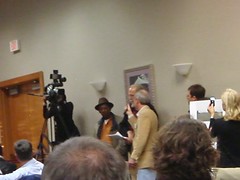
Johnna Pinholster writes in the the Valdosta Daily Times (paper 25 Oct, online 27 Oct 2010) about the the SAVE Biomass Forum at VSU:
A medical atrocity.

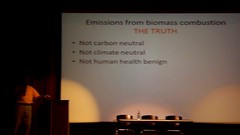
That is the phrase Dr. William Sammons used to described biomass energy plants at Monday night’s biomass forum at Valdosta State University’s Student Union theater.

Dr. Sammons answered many of the unanswered concerns about the biomass incinerator, and, unlike the lack of peer-reviewed evidence from the plant proponents: Continue reading

AAUW Candidate Forum Today, 7PM

Meet the candidates tonight:
AAUW Candidate Forum
7:00 p.m. – Rainwater Conference Center – The Valdosta chapter of the American Asso. of University Women will host the forum. It is open to the public. For more information, Dr. Martha Leake 229-333-5756
That’s the James H. Rainwater Conference Center, 1 Meeting Place, Valdosta, GA.

It’s for all candidates: Democrats, Libertarians, Republicans, and non-partisan; for statewide, congressional, and local. Attendees will have the opportunity to submit written questions to be posed to the candidates for their response.

Just before that, the Valdosta–Lowndes County Chamber of Commerce will host a Meet the Candidates Reception, for Chamber members and their guests, 5–7 P.M. Here is a list of the candidates who have confirmed (PDF). Continue reading

Solar Booming Nationwide (so why not here?)

While the Wall Street Journal says biomass is a money-losing proposition, Stacy Feldman notes in Solve Climate News that U.S. Solar Market Booms, With Utility-Scale Projects Leading the Way:
America could add 10 gigawatts of solar power every year by 2015, enough to power 2 million new homes annually, industry and market analysts have claimed in a new report.
Continue reading

Bigger Hall: SAVE Biomass Forum at VSU

Due to popular demand, the SAVE Biomass Forum has moved to a larger hall, the Student Union Theater. That’s on the east side of North Oak Street, across from Baytree Road.

It’s still Monday, 25 October 2010 from 7 to 9 PM, organized by Students Against Violating the Environment (SAVE) at Valdosta State University (VSU). The featured speaker is Dr. William Sammons, a pediatrician who has spoken nationally on the subject. Forum flyer PDF is available. See SAVE’s facebook event page for any updates. Continue reading

ULDC Update Redraft for Monday’s Planning Commission

The Technical Review Committee (TRC) has reviewed the ULDC update and has produced a final draft for the Planning Commission, which meets Monday 25 October 2010 at 5:30 PM, still at the old county commission chambers at 325 W. Savannah Avenue.

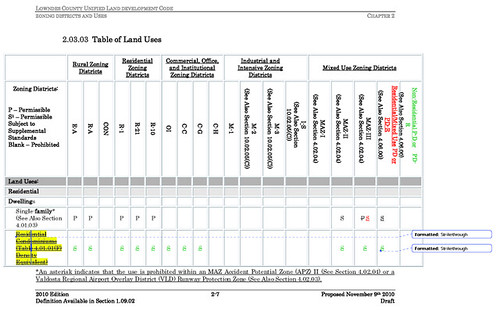
More here about condominiums.

-jsq

Continue reading

Subsidize Solar, not Coal or Biomass

The WSJ article about economic problems of biomass plants goes on to suggest the government subsidize biomass more. Clean Technica suggests a better idea: If solar got the same subsidies as fossil fuels, solar would be cheaper than current grid power everywhere in the U.S. Each taxpayer has spent about $521 towards coal over the past five years and only $7.24 towards solar. How about we reverse that?

Solar needs no fuel, no truck deliveries, and no emissions.

-jsq

WSJ on Economic Problems of Biomass Plants

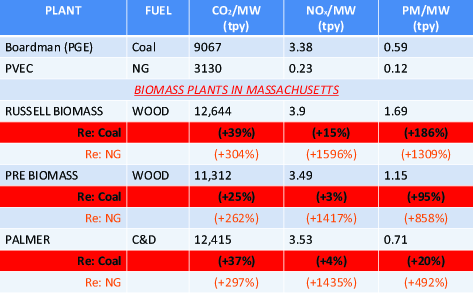
Jim Carlton points out in the Wall Street Journal some of the problems of biomass plants.
With all the plants and trees in the world, biomass energy would appear to have boundless potential.
Or as Georgia politicians are fond of saying, “Georgia is the Saudi Arabia of forest energy.”
Yet in the U.S., biomass power—generated mainly by burning wood and other plant debris—has run into roadblocks that have stymied its growth.

Here at the Northern Nevada Correctional Center, officials in 2007 built a $7.7 million biomass plant to meet all the power needs of the medium-security prison. But last month, two years after the plant opened, prison officials closed it, citing excessive costs.

“This was a project that was well intentioned, but not well implemented,” says Jeff Mohlenkamp, deputy director of support services for the Nevada Department of Corrections.

Even with a captive market (pun intended), biomass was not economically feasible.

Maybe it was an isolated case? Continue reading

What is a Condominium?

Regarding condominiums and zoning in the Lowndes County ULDC, Georgia condominium law basically says that zoning can’t deny condos if some other form of ownership is permitted. If there’s a five acre minimum, only one condo unit could fit in that five acres, but with community membership with the other condos on the associated property.. For example, on an 18 acre piece of property, the maximum number of units would be 3 or 4.

Of course, a condominium doesn’t have to be a dwelling unit. As Gary Stock points out The key feature is joint ownership:

“A condominium is not a building. It is a form of ownership.”
it could be a horse farm, a hunting camp, a fishing club, or other. There usually needs to be a general common area, then some limited common areas with building envelopes for condo unit owners to use to build buildings (or maybe buildings are already there). The catch is that because a condominium is all one piece of property jointly owned, drawing limited common areas and building envelopes doesn’t require zoning approval.

Appended is one of the more relevant sections of the Georgia code.

-jsq

§ 44-3-114. Effect of article upon land use, zoning, building, and subdivision laws; effect of Code Section 44-3-92; applicability of land use and zoning ordinances or laws to expandable condominium
Continue reading

Lowndes County – ULDC Update – TXT-2010-02 – Chapter 2 – Zoning Districts and Land Uses

We received the appended message this morning from the County Planner. It includes a request to redistribute, and it had attached this PDF.

-jsq

From: “Jason Davenport” <jdavenport@lowndescounty.com>
Date: Wed, 20 Oct 2010 10:30:40 -0400
To: “Lowndes County Land Development List” <jdavenport@lowndescounty.com>
Subject: Lowndes County – ULDC Update – TXT-2010-02 – Chapter 2 – Zoning Districts and Land Uses

Good morning. Please be advised that the Greater Lowndes Planning Commission (GLPC) and the Lowndes County Board of Commissioners (LCBOC) intend to hold public hearings to consider text amendments to the Unified Land Development Code (ULDC). The proposed amendments represent updates to Chapter 2 of the Lowndes County Unified Land Development Code (ULDC)(Please See Attached). Chapter 2 of the ULDC dominantly defines the zoning districts and classifies which land uses are allowed in those districts. The primary motivation for this request stems from direction by Lowndes County leadership to do a review of the ULDC. The guiding principles in that review were to simplify the ULDC, make the regulations defensible, and finally to make the ULDC processes timely. In the administration of that review the 10 chapters of the ULDC were put in order of priority and importance. Chapter 2 and subsequently in the coming months Chapter 4 were picked as the top chapters due to their focus on regulations that deal with the primary uses of land within the unincorporated areas of Lowndes County.

How the principles translated into a review of Chapter 2 dominantly turned into a repeated series of 3 questions:

Continue reading